
Integrated systems – How to make the right choice
Choosing an integrated system is a pivotal step for any organization that wants to optimize its performance and accelerate its digital transformation. But how can you avoid pitfalls and ensure that the investment will be worthwhile?

In a world where digital transformation is intensifying, companies can no longer operate effectively with isolated tools and fragmented data. Integrated systems—whether ERP, CRM, WMS, PLM, or TMS—have become essential levers of competitiveness. However, selecting the right enterprise resource planning (ERP) software remains a complex decision. If chosen poorly, it can lead to high costs and slow down your operations. If chosen well, on the other hand, it becomes a powerful driver of growth and efficiency. This article offers a clear and structured approach to guide you through this strategic decision.
→To discover a concrete example and expert testimonials, you can also watch our webinar on selecting and acquiring an ERP system, hosted by Stelpro: Watch the webinar.
Why choosing an integrated system is strategic
Today, organizations operate in an environment where operational complexity, data proliferation, and regulatory requirements are constantly increasing. In this context, an integrated system allows information to be centralized, silos to be reduced, and a comprehensive view of the business to be obtained in real time. A modern ERP system covers a wide range of functions, from accounting to human resources management, logistics, customer relations, and product lifecycle management. This integration improves decision-making, strengthens collaboration between departments, and facilitates innovation.
But beyond the benefits, adopting an ERP system remains a risky project if certain mistakes are made. Too many organizations are seduced by aggressive marketing from suppliers without checking whether the solution really meets their needs. Others neglect the human dimension and underestimate the importance of change management. Finally, it is not uncommon for the hidden costs associated with integration, training, and maintenance to be minimized, which jeopardizes the return on investment.
The Eficio three-step approach
To maximize the chances of success, Eficio offers a structured three-step approach.
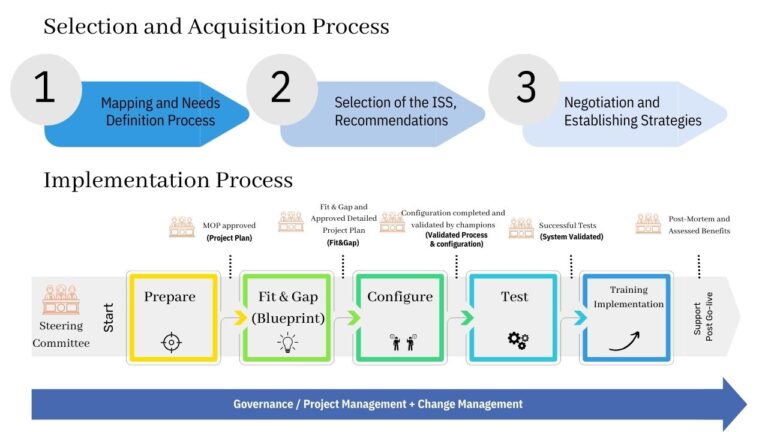
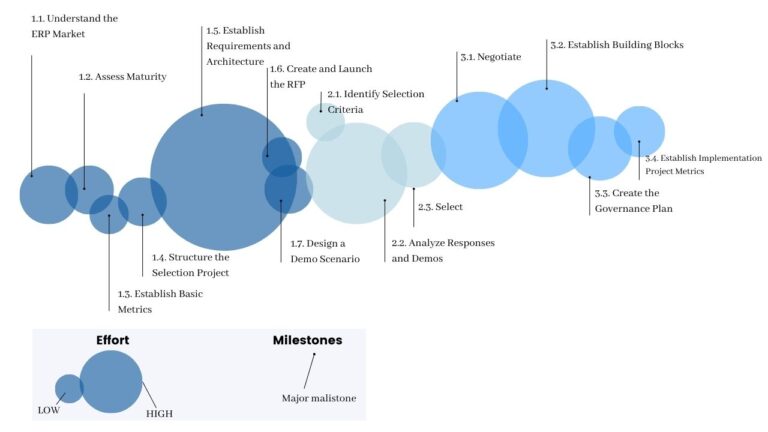
The first step is to clearly define your needs and map out your processes. This initial analysis allows you to understand where your pain points lie, assess your organization’s digital maturity, and identify key selection criteria, such as security, compatibility, and the future system’s scalability.
The second step involves evaluating and comparing solutions. This does not simply mean requesting generic demonstrations, but rather developing precise specifications and a concrete test scenario. This allows each supplier to demonstrate how their system meets your requirements. The responses obtained must be analyzed objectively using a weighted criteria grid to avoid decisions influenced by purely commercial arguments.
Finally, the third stage is negotiation and preparation. Contrary to popular belief, success is not solely determined by price, but by the ability to establish a lasting relationship and a clear contractual framework. You need to discuss update conditions, hosting (cloud or on-site), technical support, project governance, and change management. By negotiating rigorously and anticipating long-term issues, you ensure smoother implementation and better cost control.

From selection to deployment: essential continuity
Choosing an ERP system is not an end in itself, but rather the beginning of a transformation project. Once the selection process is complete, it is time for deployment. This requires strong governance, with a vigilant steering committee, and a proven implementation method: preparing teams, validating gaps between existing processes and software functionalities (Fit-Gap), configuring the solution, testing under real conditions, and then training users before full deployment.
This gradual approach reduces the risk of internal resistance and limits the additional costs associated with excessive customization. It also helps to embed the solution in the organizational culture. According to a recent Gartner study, more than half of ERP projects fail in part due to a lack of organizational preparation. This demonstrates the importance of investing in change management as much as in the technology itself.
Conclusion
A well-chosen integrated system can transform an organization’s performance and make it more agile, while a poor choice can become a costly hindrance. By taking the time to define your needs, rigorously evaluate the options, and negotiate a clear framework, you increase your chances of success. But the key also lies in change management and your teams’ ability to embrace the new tool.
👉 To learn more about this topic, we invite you to read our article on best practices for a successful IT strategy in SMEs, as well as the Gartner guide on factors for successful ERP projects.
FAQ – Integrated Systems (PGI/ERP)
What is an integrated system (ERP)?
An integrated system, or enterprise resource planning (ERP) software, is a software solution that combines several management functions in a single platform: finance, production, logistics, human resources, and customer relations. The goal is to avoid silos and centralize information.
What is the difference between an ERP and a PGI?
The term PGI is the French equivalent of the English term ERP (Enterprise Resource Planning). Both refer to the same category of integrated software used to automate and centralize business process management.
How do I choose the right ERP for my business?
The choice of an ERP system should begin with an analysis of your actual needs and existing processes. It is essential to compare several solutions, test the features with your own scenarios, and negotiate a contract that takes into account support, updates, and project governance.
How much does it cost to install an integrated system?
The cost varies depending on the size of the organization, the complexity of the processes, and the hosting method chosen (cloud or on-premises). Integration, training, and maintenance costs must also be taken into account. This is why an accurate assessment of the total cost of ownership (TCO) is essential.
What are the main risks of an ERP or PGI project?
The most common risks are related to resistance to change, underestimation of hidden costs, and a lack of organizational preparedness. Structured support and effective change management can help reduce these risks.
Subscribe to the Eficio newsletter and be the first to receive our updates!